
Bloomberg Tax Planning Tool
Designed a system-generated tax planning engine, liberating Enterprise tax teams from managing calcs in fragile spreadsheets.
Overview
Product: Fixed Assets
Role: Product Designer — end-to-end ownership across research, workflow design, and UX
Timeline: January – August 2023
Outcome: Replaced a spreadsheet-dependent tax modeling process with a tax planning generation scenario engine.
My Role
This project gave me my first blank-slate opportunity — designing a full product experience for tax professionals from the ground up. The original direction centered on a manual tool for managing asset calculations, but customer conversations revealed a bigger opportunity. Collaborating with the PM, we shifted course and designed a tax planning experience that replaced fragile spreadsheets with a tool that automatically generates all permutations and helps teams finalize their tax strategy.
Research Findings
Tax depreciation are complex calculations: One of the most consequential calculations a corporate tax team makes involving thousands of assets, multiple election types, proposed regulatory changes, and year-end deadlines that leave little room for error. Getting it wrong isn't just inefficient. It's expensive.
Working in Excel is too fragile: The tool tax professionals were using to manage all of this was Excel. Bloomberg Tax's Fixed Assets tool didn't give them a better option. When they needed to compare bonus depreciation elections across asset classes, or forecasting depreciation totals against planned capital expenditures, users exported their data, built the model manually in a spreadsheet, and hoped they hadn't introduced an error somewhere in the process.
Asset inventory constantly changes: An Enterprise customer buys hundreds of thousands of assets within a tax year, so tax teams were constantly calculated the depreciation scenarios of newly acquired assets.

Customer Current Process
Early research confirmed the scale of the problem in practice. Tax professionals weren't just frustrated with spreadsheets — they were constrained by them. The manual process meant they could only realistically model a handful of scenarios before a decision point.

Problem Statment
Corporate tax teams managing thousands of assets had no reliable way to model depreciation scenarios at scale. Without a purpose-built tool, they were forced to manually build fragile spreadsheets in Excel which was time-consuming and error-prone process, and limited to building only a handful of strategies to evaluate.
First Design Direction
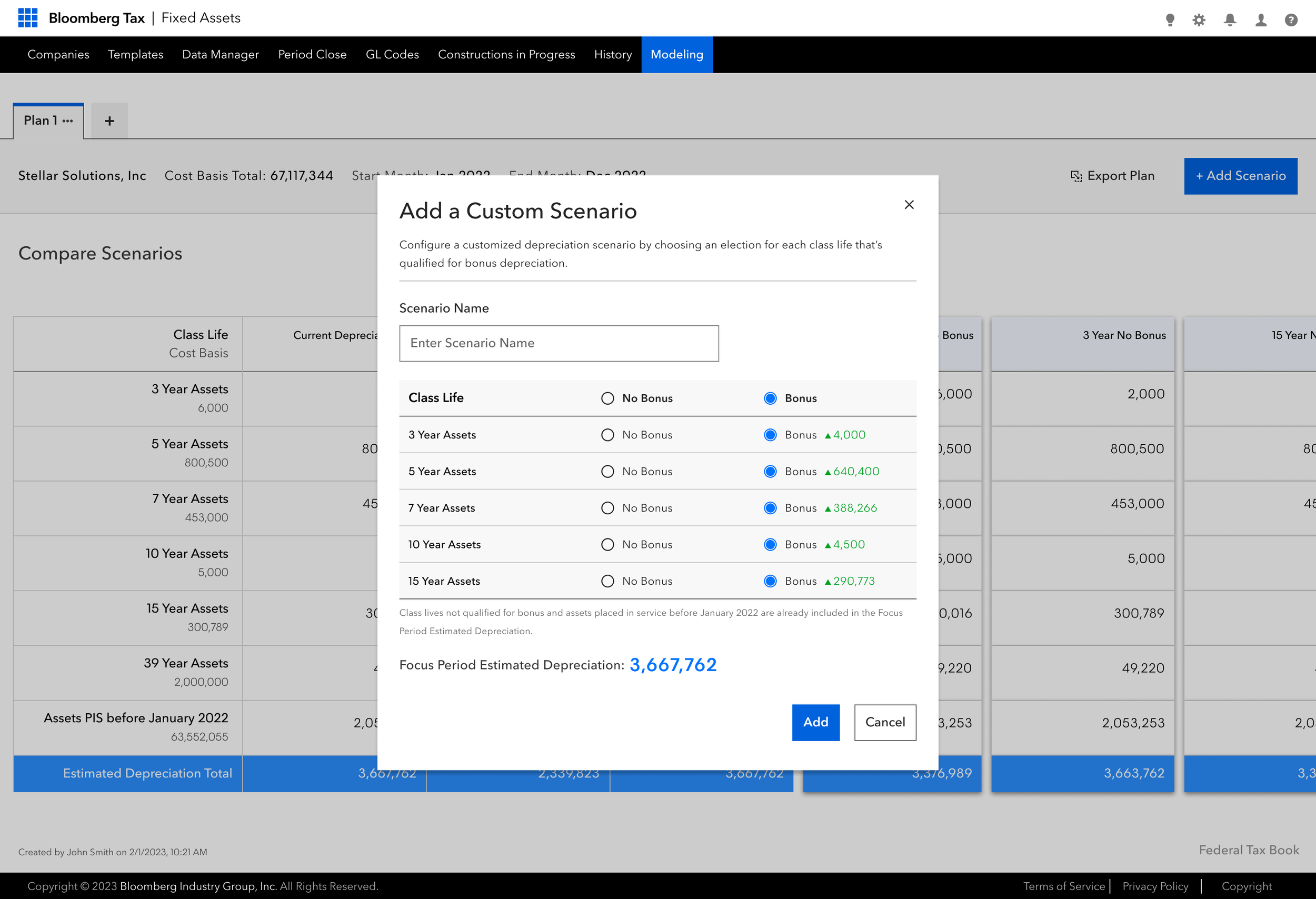
My first iteration followed the product manager’s guidance, which was to give users a tool to build scenarios themselves. Set your parameters, add your assumptions, generate a result. Repeat.
However, this solution didn’t expose all the possible strategies which is what tax teams needed. I knew we could find a stronger product direction.
The Design Pivot
Research findings revealed tax professionals are overwhelmed crunching numbers. Therefore tax professionals didn’t need another tool that asked users to construct scenarios and create tables.
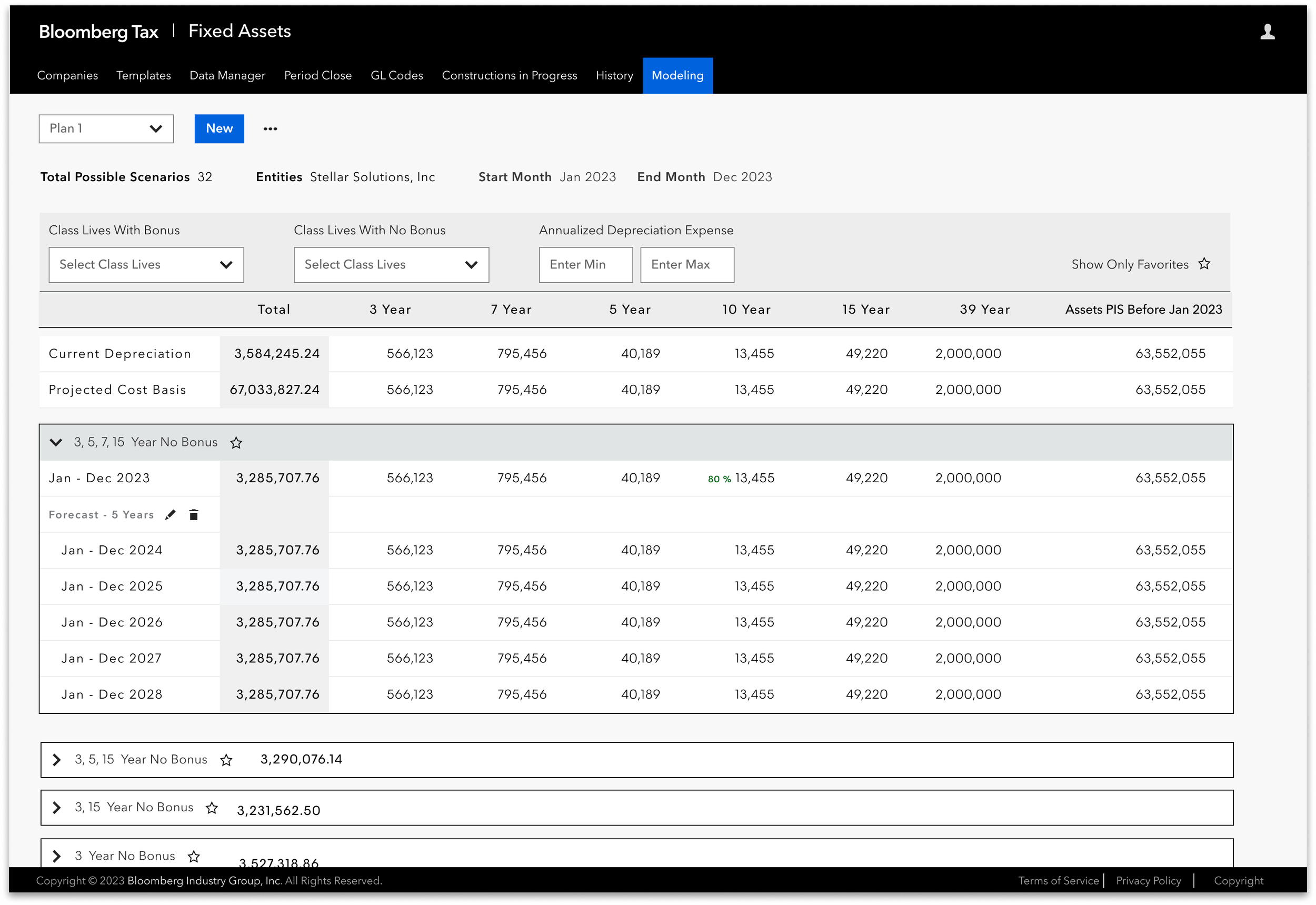
I embraced the challenge to design a tool where tax professionals could review all the permutations and filter toward the decision that made sense for their situation.
I designed a tax planning engine that auto-generates all of the calculation possibilities and surfaces them in a clean comparison interface, and lets tax professionals filter by election type or target depreciation totals.
There's no toggling between assumptions and recalculating. There's no exporting to a spreadsheet to see what a different election would produce. Tax teams now can simply browse and discuss every strategy, replacing guesswork and frustration with confidence.

Explore how I led the user research study that defined Bloomberg Law's AI workspace strategy